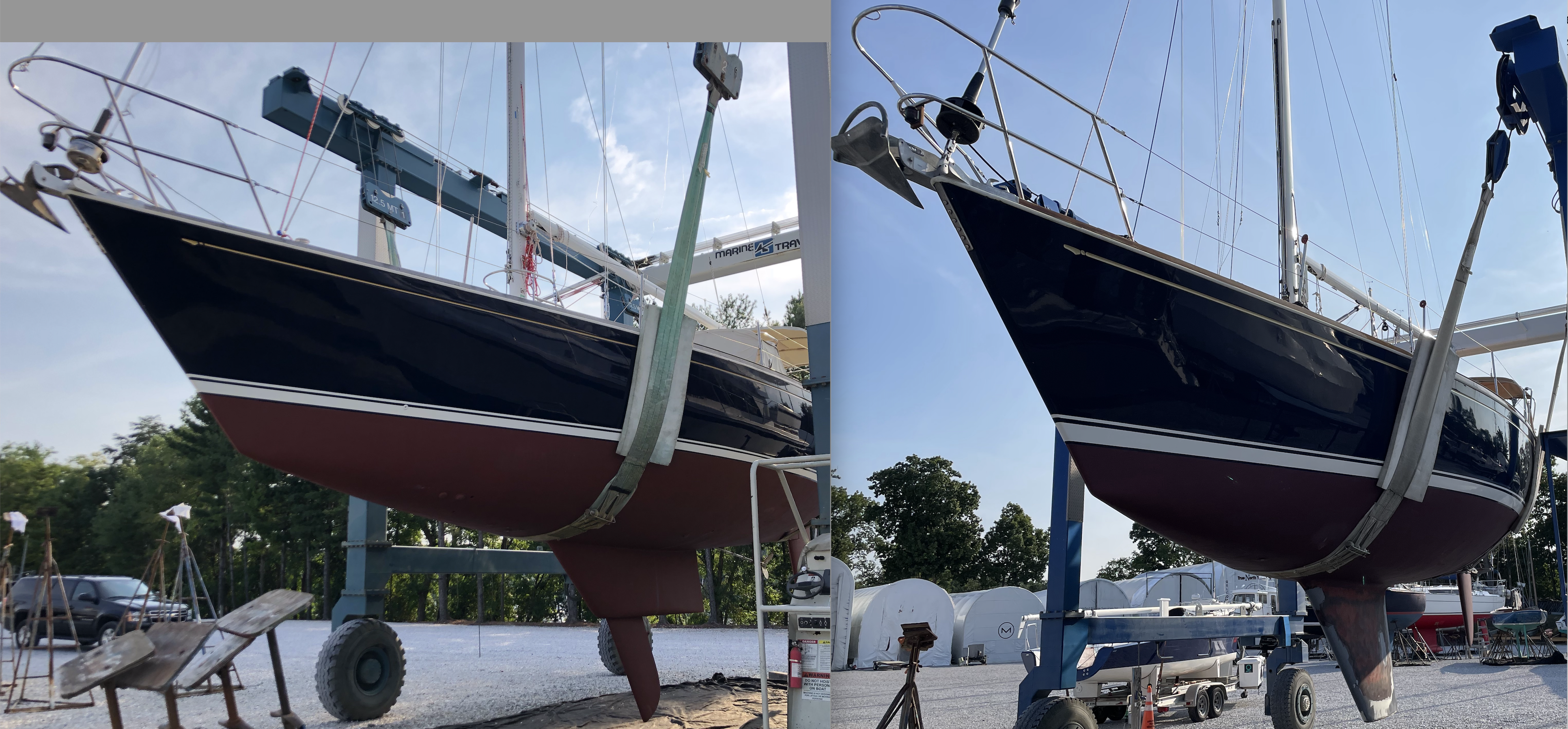
I had both of these photos in my archive, and I thought it was fun to put them side-by-side as a comparison. On the left, my 1989 Sabre 42 keel/centerboard. On the right, our current 38 MKII with the deep keel.
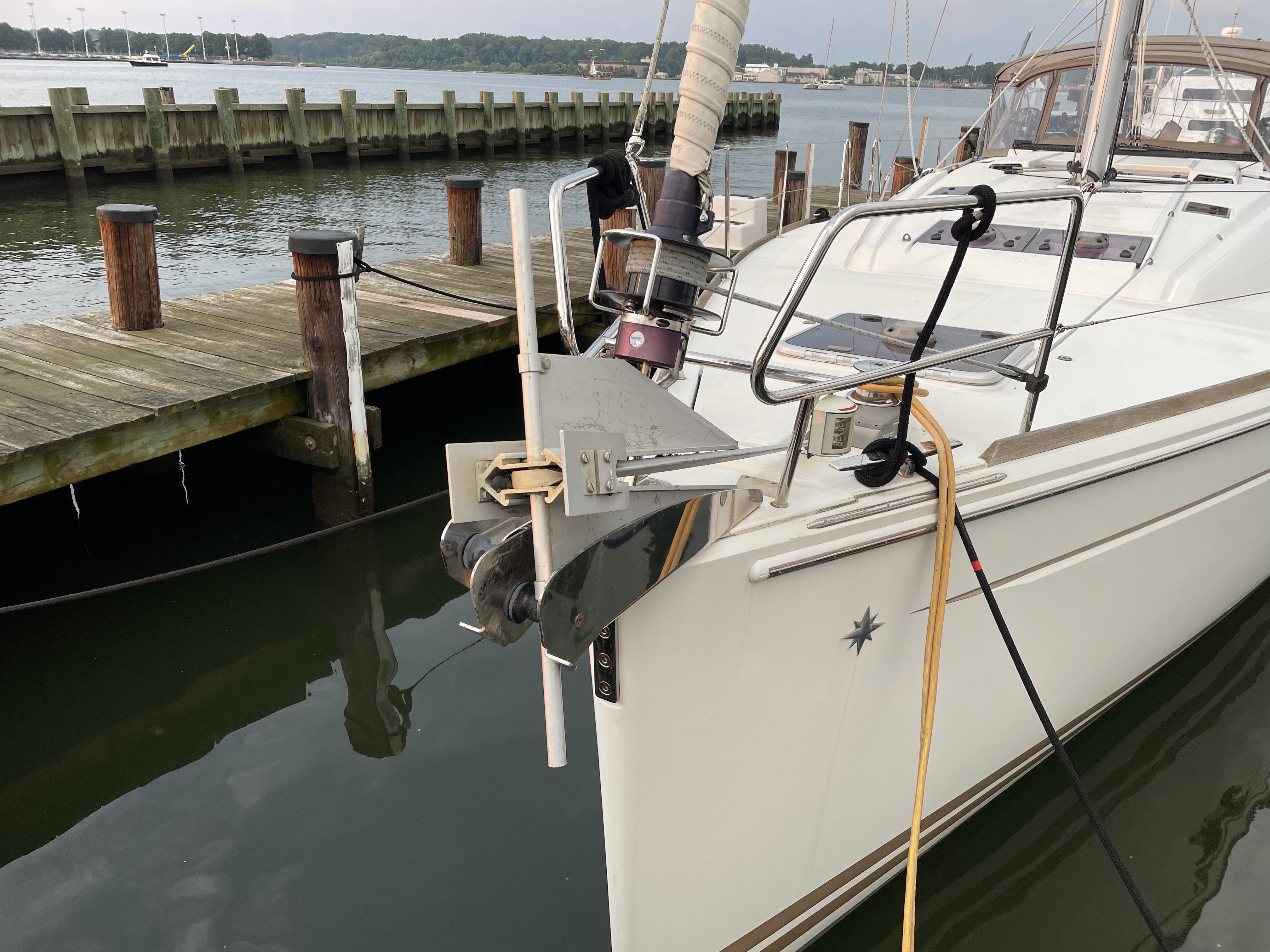
I guess this setup (kinda) works as a way to store a Fortress anchor on a roller, at least if it’s lashed down when at sea. Somehow, though, it triggers me as a devout anchornerd.
Contrary to the narrator’s glowing review of this (lost) yacht’s crew, I see several situations that could have been handled much better by the leadership of this yacht, which reinforce learning lessons of other yachting casualties. Again, I post criticism not to shame a crew that have lost their yacht, but because I do not think the yachting community is well served by puff pieces like this one heaping praise on the yacht’s leadership. We cannot learn from causalities as a community unless we are brutally honest with ourselves and our colleagues about preventable mistakes that contribute to yacht losses that endanger both the yachts’ crews and rescue personnel. While I praise the yacht’s captain for his candor in relating the story, here are the major lessons I think we can all take from this story:
At around 6 minutes into the video, the narration states that the main engine failed “due to sludge in the bottom of the tank being stirred up during all of the bouncing around.” It is unacceptable not to have verified the absence of contamination in the fuel tank(s) before departing Newport. The yacht was responsible for the lives of a full race crew going to Bermuda, and for a delivery crew returning. This is literally the first technical matter that must be addressed on any yacht heading out into the open sea. For more thoughts on clean fuel, see this and this.
At around 6:14 in the video, the narrator relates that the captain says that he could not change the fouled fuel filters because he was not in a calm harbor. That assertion is completely unacceptable. The fouling of fuel filters is always a possibility at sea, and is in fact mostly likely to occur in a rough sea state. That is why it is imperative that all yachts putting out to sea have at least one crew technically capable of replacing both the pre fuel filter (“Racor”) and on-engine fuel filter in any sea condition. The failure of the main engine was therefore entirely preventable insofar as it was caused by fuel contamination, which never should have been present in the first place.
The captain reports severe impacts when falling off of large seas. Technical leadership on a yacht should always go below to check for damage and rule out the ingress of water in such a situation, especially on an older wooden yacht. If that was done here, he does not report it in his narrative. Whether it was or was not done in this case, let’s all make that an integral part of our standard operating procedures in rough weather. On fiberglass boats, the on-watch should check for broken fiberglass tabbing around bulkheads and floor stringers, or signs of grid separation on more recent production boats.
Starting at 9:40, the owner says he went below and handed the helm over to his daughter. He then discovered that all manner of items had fallen to the cabin sole in the rough seas, greatly impeding his ability to move around the cabin to investigate the source of water ingress. Whenever we are heading into rough weather, a watch must always be assigned to secure all loose items below deck. This story shows exactly why this step is table-stakes for proper blue water seamanship.
Again, no disrespect intended toward a yacht captain grieving the loss of his vessel, but let’s all take these stories to heart and learn from them. Like everyone else, I screw up regularly when operating boats. Each time I am reminded: a mistake is never shameful, only willfully ignoring the learning lessons of those mistakes would be.
 Rover's Blog