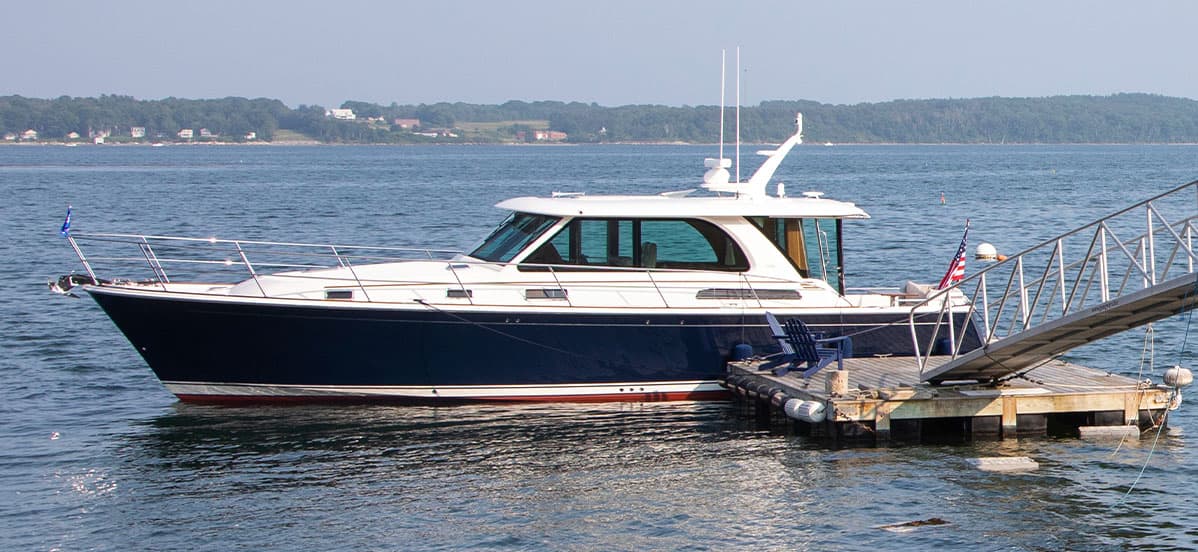
Blue Moon is launched and we have slowly been getting her ready for our beloved fall season in Annapolis. Earlier in the year we thought about bringing her to New England for the summer, but we still have a long way to go to get her to be an ideal live aboard. So we decided to keep her local this year and instead hitch a ride on a very good friend’s Sabre 45 Salon Express powerboat, which is a much faster way to get up north for a week of great Long Island Sound cruising.
Photo Credit: Sabre Yachts
We had a great cruise, and below is the most exciting video footage we captured during the trip down the southern Delaware Bay. This video shows what happens when you push a weather window and travel to Cape May with a strong ebb current running against a 15-20 knot southerly wind. And this wasn’t the height of it – in this video we were still making 11 knots or so but shortly after we had to slow to 4-6 knots to keep the boat from beating itself to death. Despite the 45’s significant sheer, after this video was shot we managed to comprehensively stuff the bow at least 5 times and wash green water back to the windshield! Watch those weather forecasts, folks, and if this kind of thing isn’t your cup of tea avoid a wind-against-current scenario on the Delaware Bay!
Spring projects are well underway! I got the spreaders painted over the winter but it’s been cold enough that I really didn’t get a start on anything else before the last couple of weeks. But now, we’re leaping ahead!
I would recap our 2024 summer with its own post if there was enough to tell, but I think we can sum it up a handful of bullet points:
This summer our usage patterns made us look more like poseurs than experienced offshore cruiser / racers / liveaboards but…
… we had an absolute blast and loved every minute of it!
This was our first time leasing a slip for a season since we sold our J/29 over 24 years ago. What a treat! We got a ton of use out of the boat right at the dock – randomly eating lunches and dinners aboard, sleeping aboard right at the dock, and generally such easy access to her.
We only had one overnight cruise all season, and we thoroughly enjoyed it.
We got in a bunch of day sails, which we combined with late afternoon anchoring off of the Naval Academy wall for wine with friends. Fantastic!
As usual she blew the doors off of any other cruising boats she came across, which we of course “raced” with every opportunity.
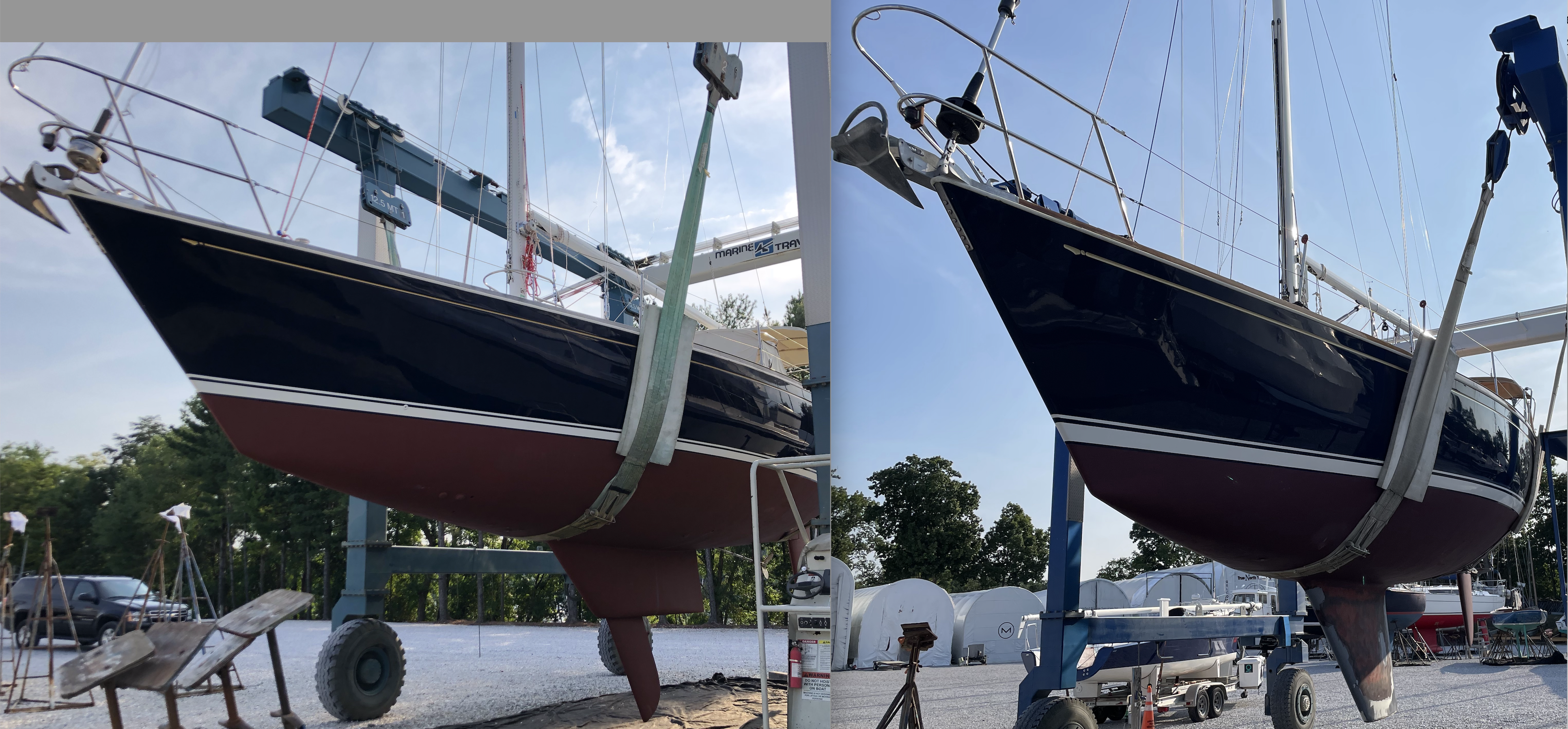
I had both of these photos in my archive, and I thought it was fun to put them side-by-side as a comparison. On the left, my 1989 Sabre 42 keel/centerboard. On the right, our current 38 MKII with the deep keel.
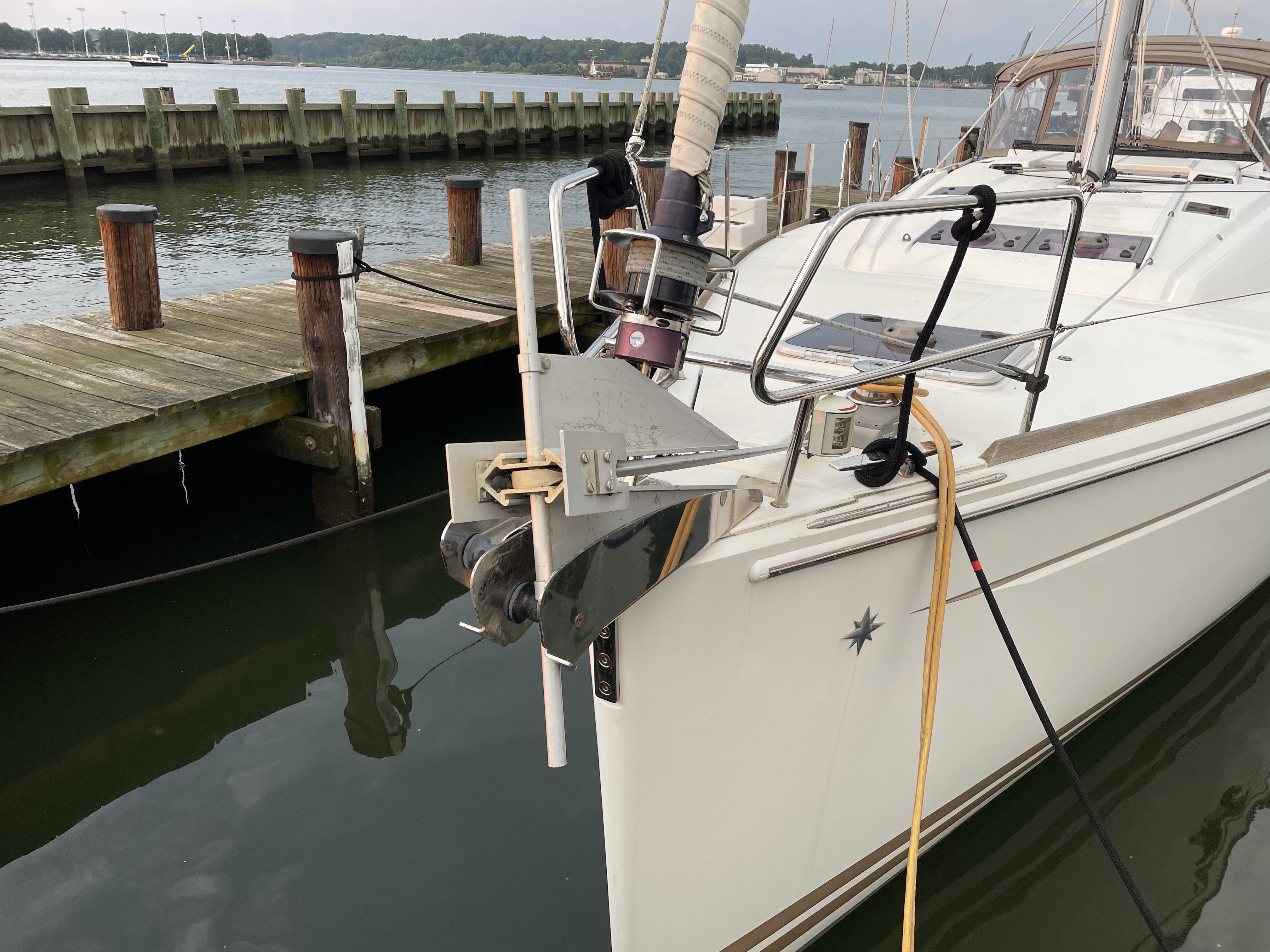
I guess this setup (kinda) works as a way to store a Fortress anchor on a roller, at least if it’s lashed down when at sea. Somehow, though, it triggers me as a devout anchornerd.
Contrary to the narrator’s glowing review of this (lost) yacht’s crew, I see several situations that could have been handled much better by the leadership of this yacht, which reinforce learning lessons of other yachting casualties. Again, I post criticism not to shame a crew that have lost their yacht, but because I do not think the yachting community is well served by puff pieces like this one heaping praise on the yacht’s leadership. We cannot learn from causalities as a community unless we are brutally honest with ourselves and our colleagues about preventable mistakes that contribute to yacht losses that endanger both the yachts’ crews and rescue personnel. While I praise the yacht’s captain for his candor in relating the story, here are the major lessons I think we can all take from this story:
At around 6 minutes into the video, the narration states that the main engine failed “due to sludge in the bottom of the tank being stirred up during all of the bouncing around.” It is unacceptable not to have verified the absence of contamination in the fuel tank(s) before departing Newport. The yacht was responsible for the lives of a full race crew going to Bermuda, and for a delivery crew returning. This is literally the first technical matter that must be addressed on any yacht heading out into the open sea. For more thoughts on clean fuel, see this and this.
At around 6:14 in the video, the narrator relates that the captain says that he could not change the fouled fuel filters because he was not in a calm harbor. That assertion is completely unacceptable. The fouling of fuel filters is always a possibility at sea, and is in fact mostly likely to occur in a rough sea state. That is why it is imperative that all yachts putting out to sea have at least one crew technically capable of replacing both the pre fuel filter (“Racor”) and on-engine fuel filter in any sea condition. The failure of the main engine was therefore entirely preventable insofar as it was caused by fuel contamination, which never should have been present in the first place.
The captain reports severe impacts when falling off of large seas. Technical leadership on a yacht should always go below to check for damage and rule out the ingress of water in such a situation, especially on an older wooden yacht. If that was done here, he does not report it in his narrative. Whether it was or was not done in this case, let’s all make that an integral part of our standard operating procedures in rough weather. On fiberglass boats, the on-watch should check for broken fiberglass tabbing around bulkheads and floor stringers, or signs of grid separation on more recent production boats.
Starting at 9:40, the owner says he went below and handed the helm over to his daughter. He then discovered that all manner of items had fallen to the cabin sole in the rough seas, greatly impeding his ability to move around the cabin to investigate the source of water ingress. Whenever we are heading into rough weather, a watch must always be assigned to secure all loose items below deck. This story shows exactly why this step is table-stakes for proper blue water seamanship.
Again, no disrespect intended toward a yacht captain grieving the loss of his vessel, but let’s all take these stories to heart and learn from them. Like everyone else, I screw up regularly when operating boats. Each time I am reminded: a mistake is never shameful, only willfully ignoring the learning lessons of those mistakes would be.
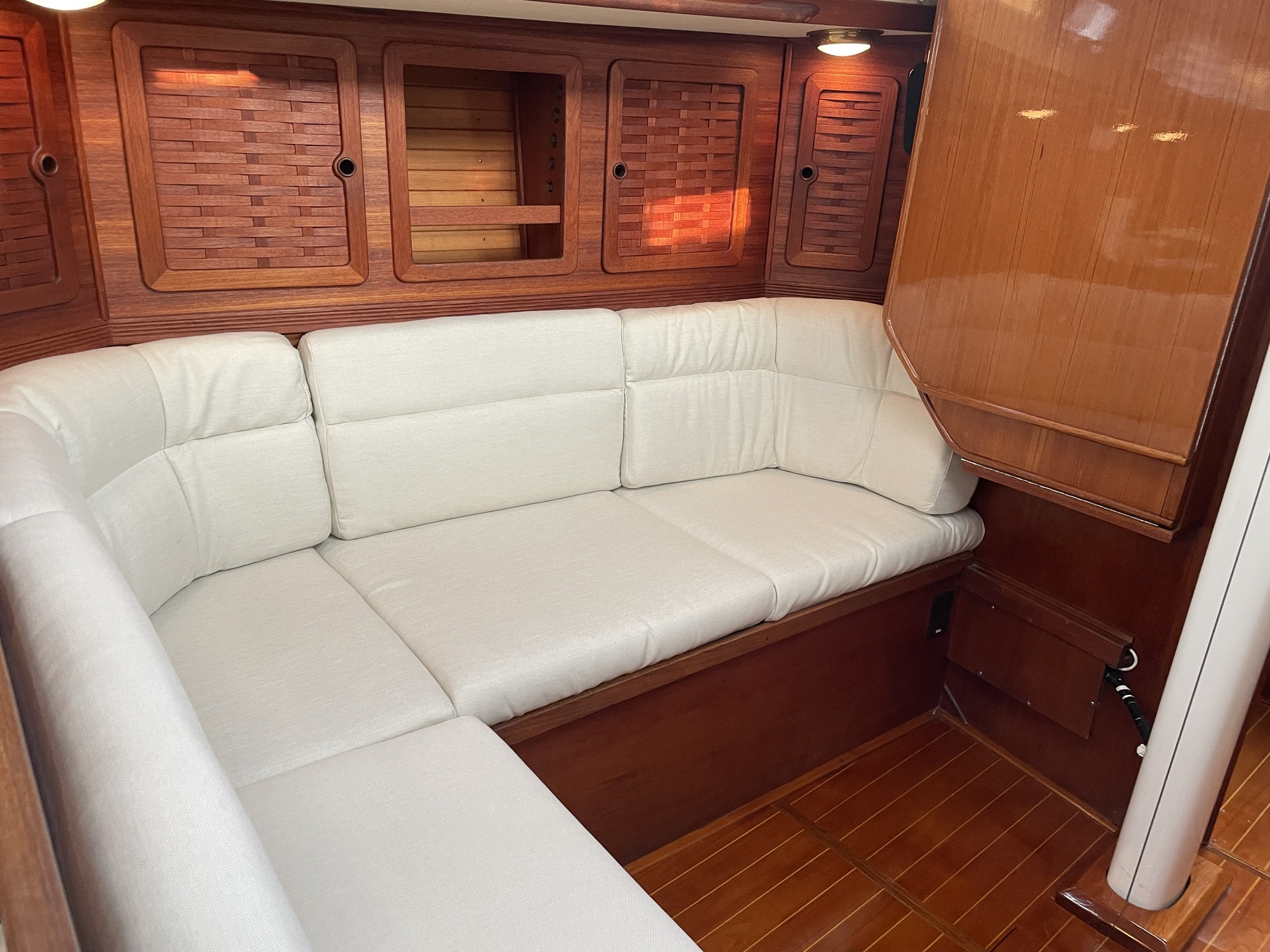
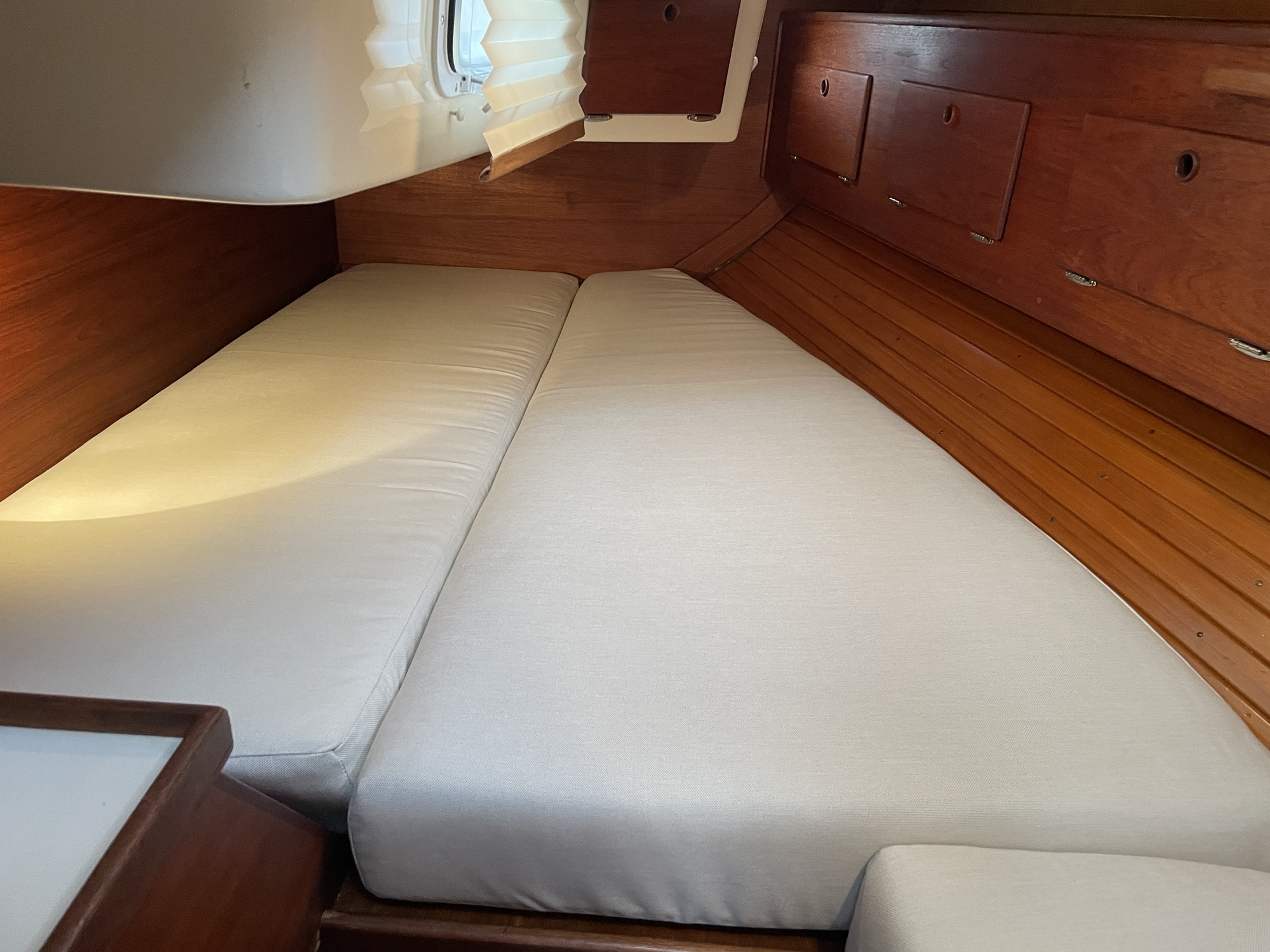
We launched earlier this week, and since then we’ve been cleaning up the winter construction dust, filling water, testing systems and …. today delivering our brand new cushions!
Next up: bend on the mainsail, load personal items and provisions, then begin our season!
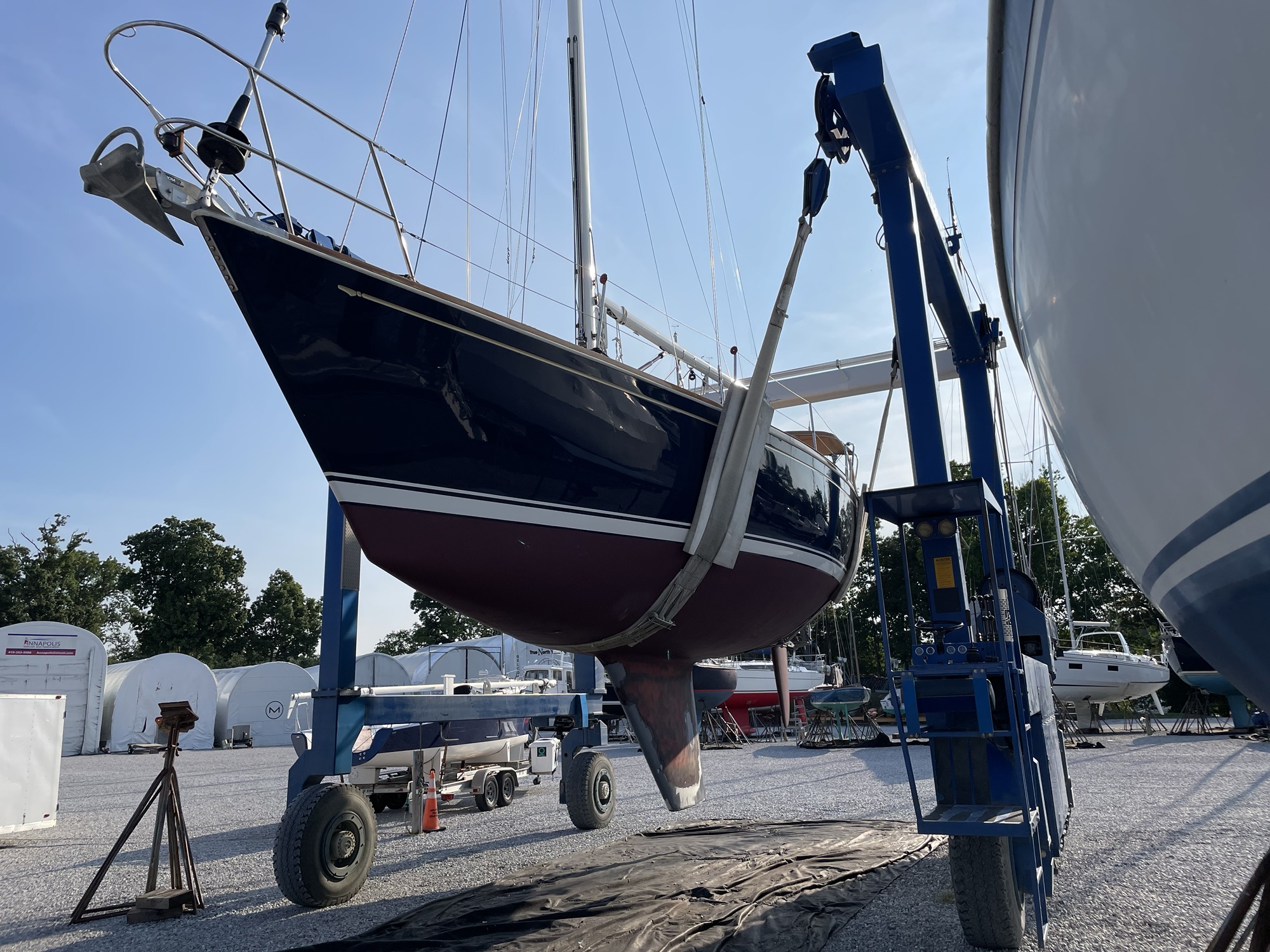
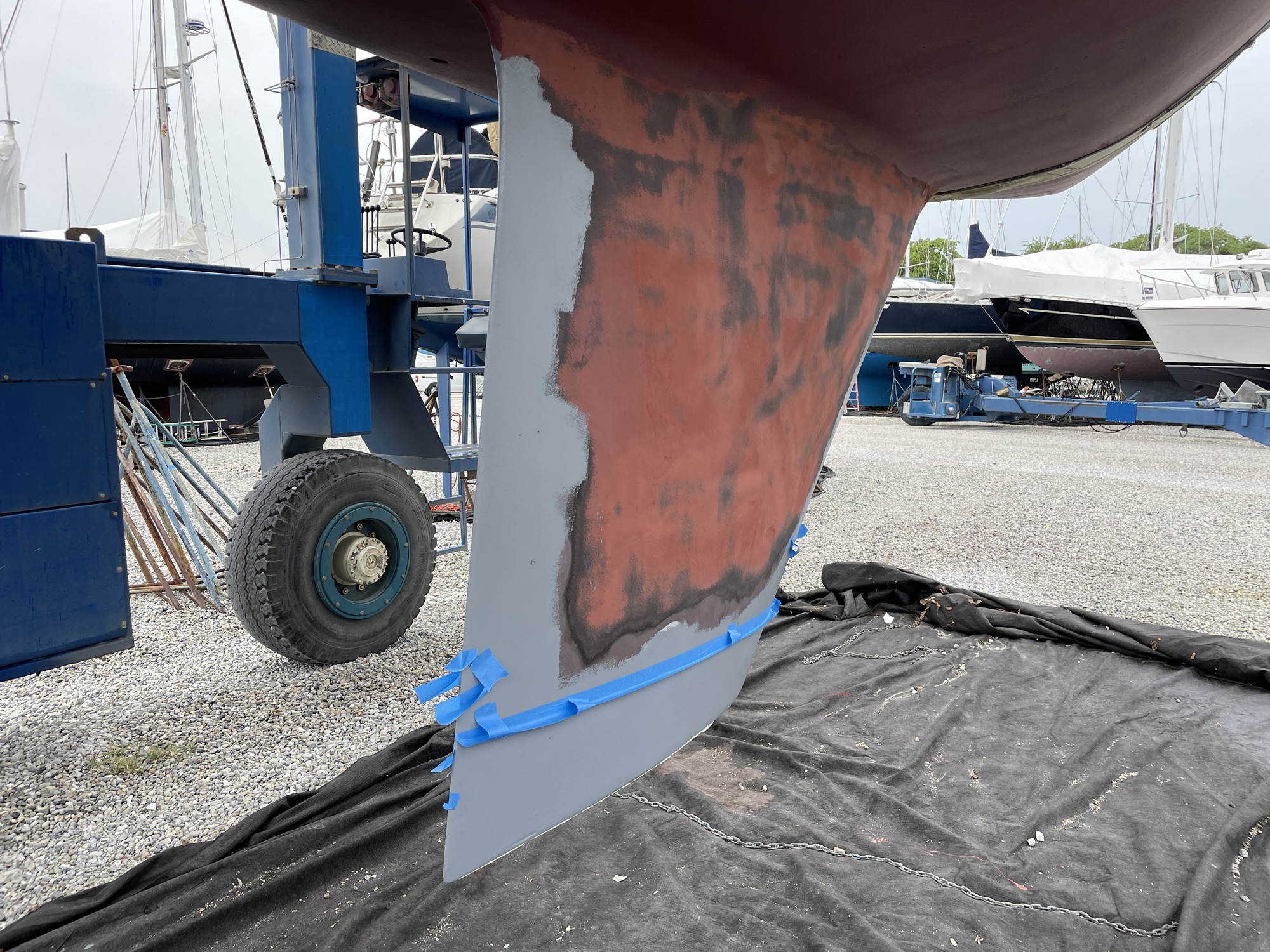
We have launched Blue Moon! But not before we got some minor speed work done! We had some spots on the keel where the fairing compound and lost its bond with the lead, so we had those ground down and re faired. Then we invested in a little bit of speed work indulgence: we hung her in the slings over a weekend and had the bottom of the keel faired!
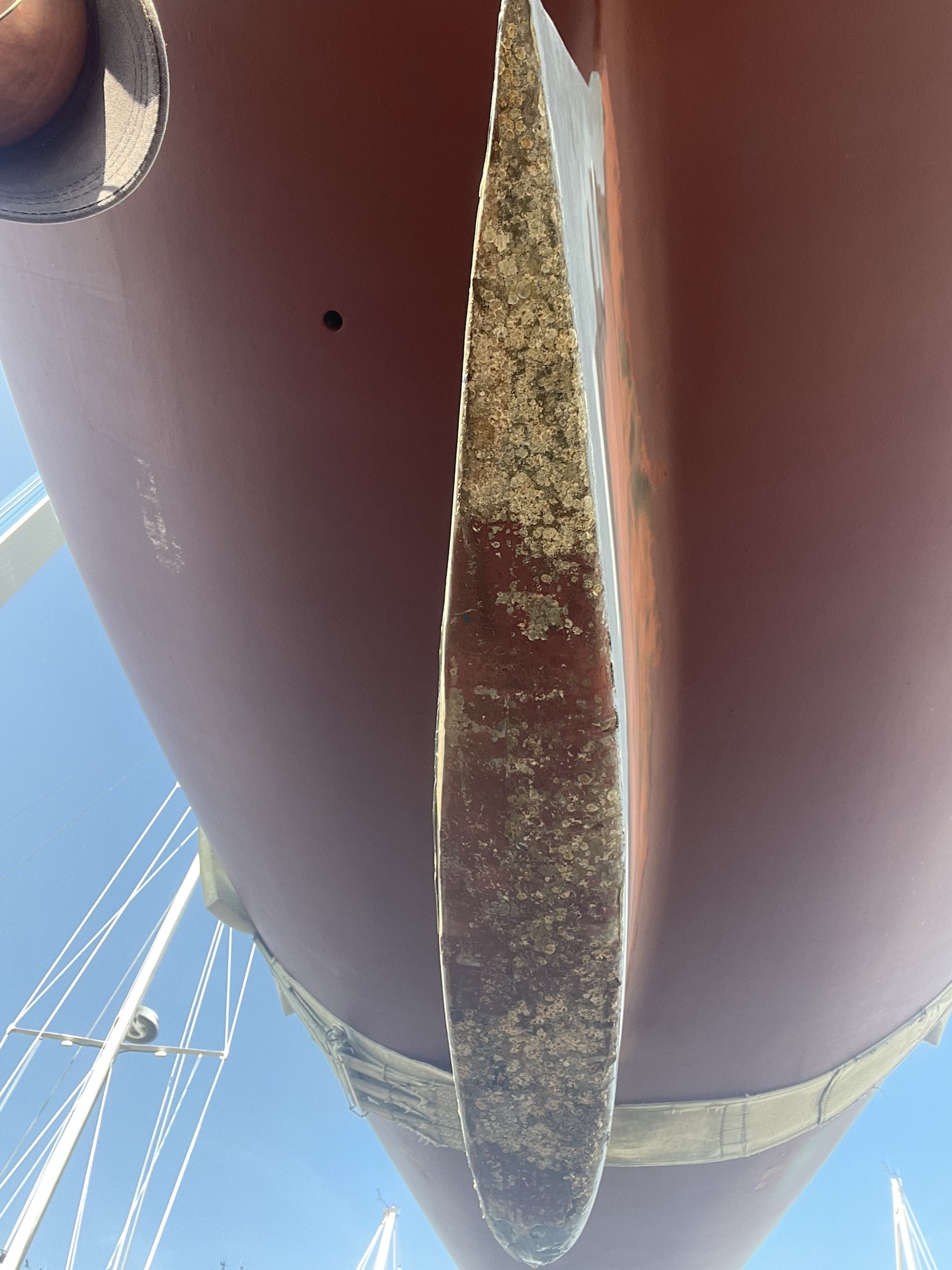
Nuuuuupe. Too much drag from fairing flaking off and barnacle deposits!That’s more like it. Keel bottom ground down, faired back up and later painted before a Monday morning launch. Now she can go abuse more brand new European cruising boats out on the Bay by an even bigger margin!
With the moldy vinyl hull covering replaced and the aft cabin re assembled, the time came to turn my attention to some of the issues we have faced with the Sabre’s plumbing.
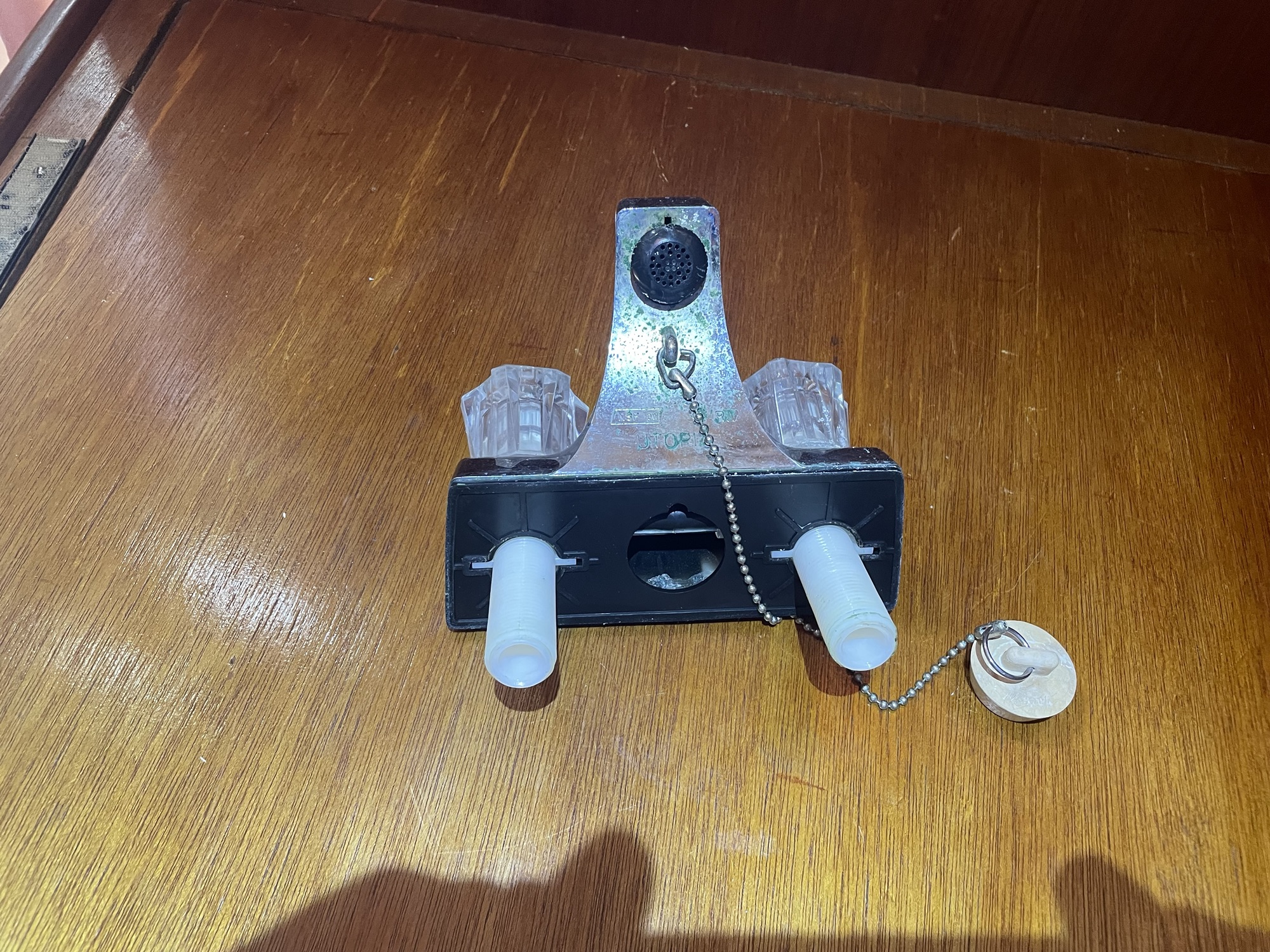
First, the faucets in both the aft head and the forward cabin looked crappy. Time to yank them and replace with some Home Depot replacements.
Long time readers of this blog may remember that I sometimes have a habit of over investing in vanity projects that turn out to be a huge amount of work.
Oops, I did it again.
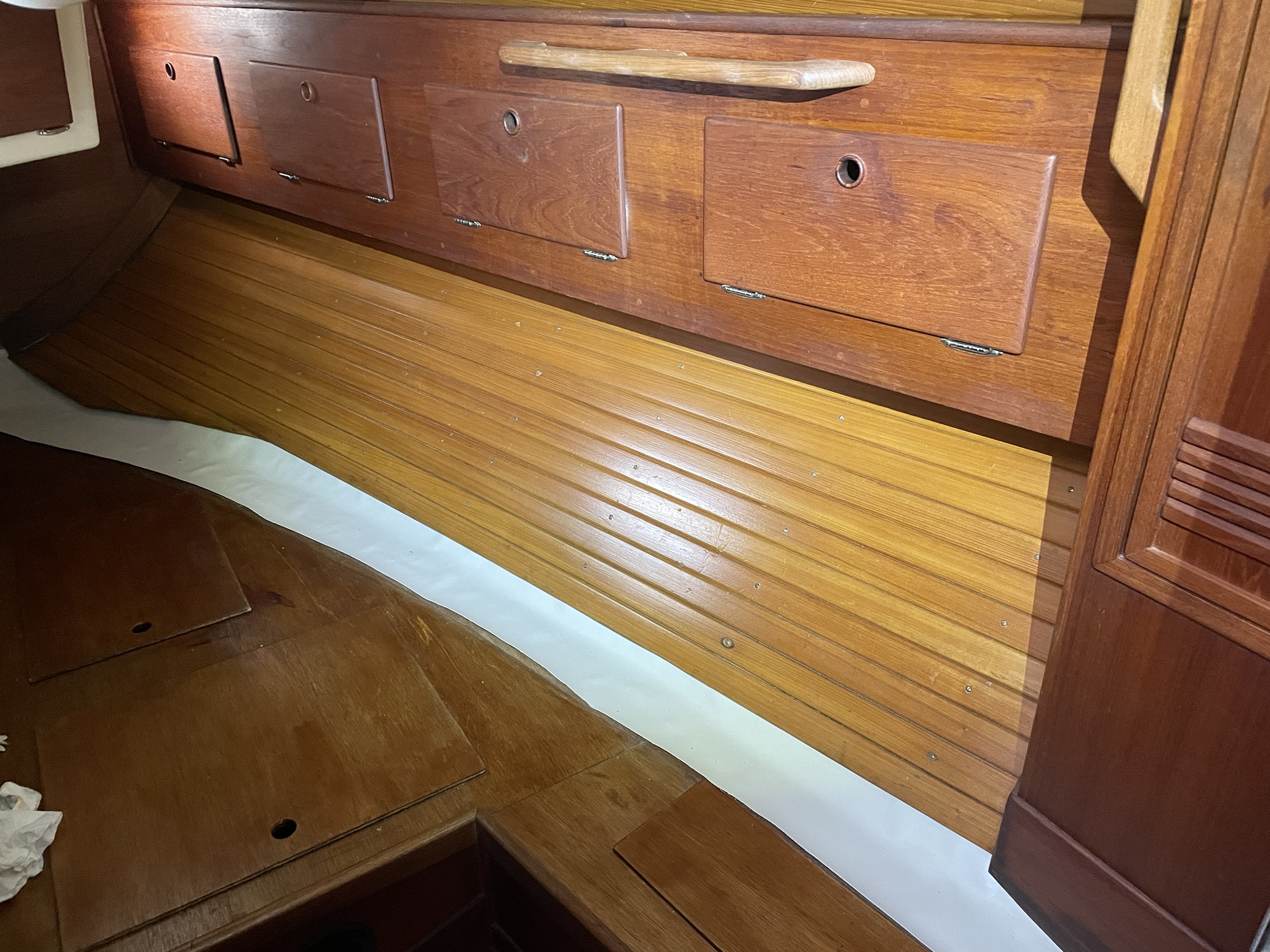
Having owned both our Hylas 54 and two 1980s Sabre now, we have taken note of the extremely high level of fit and finish in the interior of semi-custom boats like the Hylas. Every locker in Rover’s cabin is fully finished with interior panels and shelves, where the lockers in the Sabre are simply lined with vinyl and lack any shelving. The Sabres are incredibly well built in general, but the factory did save on labor in certain contexts like this one. Since I was replacing the vinyl in the port side forward locker anyway, I decided to line it with a floor and side panels and to add a shelf finished with a beautiful walnut veneer we inherited with the Hylas. This post will make it sound like a simple enough endeavor, but it represented a massive amount of work that gave me a whole new appreciation for how many labor hours are in a Hylas!
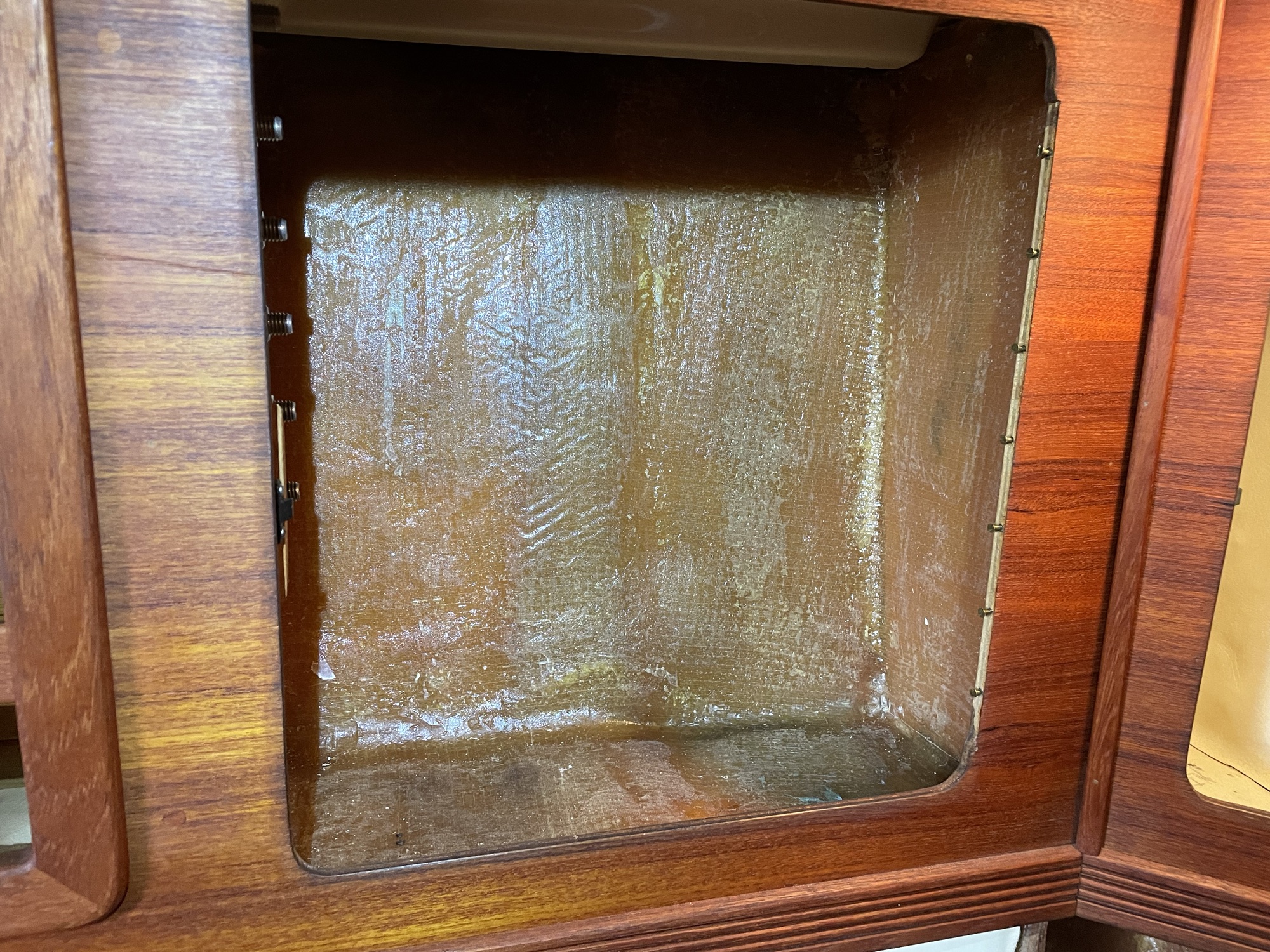
Here is the locker with the vinyl covering removed. Note that Sabre has coated the entirety of the locker with fiberglass to protect the wood bulkheads from rotting way due to the inevitable chainplate leaks that will periodically crop up during the boat’s life. This represents fantastic construction, but simply covering the fiberglass with vinyl felt like a bit of a shortcut – right up until I started this project!Continue reading Another Stupid Vanity Project→



 Rover's Blog