Category Archives: Tips & Tricks

How Not To Install A Holding Tank

IMG_2268

By Rich

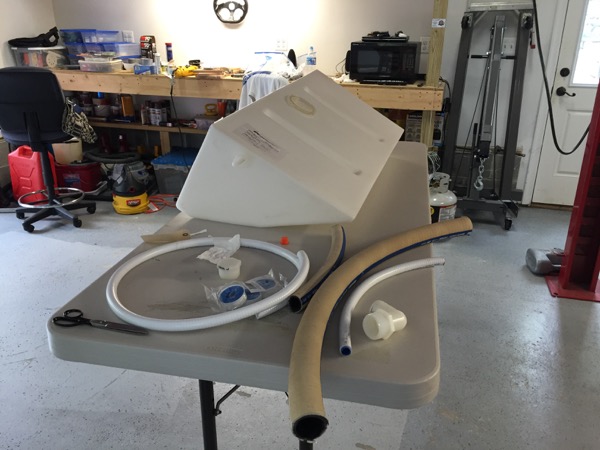
Among the rules of installing water, fuel, or waste tanks on a boat is the Golden Rule: marine tanks must be installed in such a manner that no significant forces act upon the tanks’ fittings. Let me say that again, in case it wasn’t entirely clear:

Marine tanks must be installed in such a manner that no significant forces act upon the tanks’ fittings. Continue reading How Not To Install A Holding Tank

Centerboard Boat? How To Prevent Potentially Dangerous Leaks

IMG_2099

By Rich

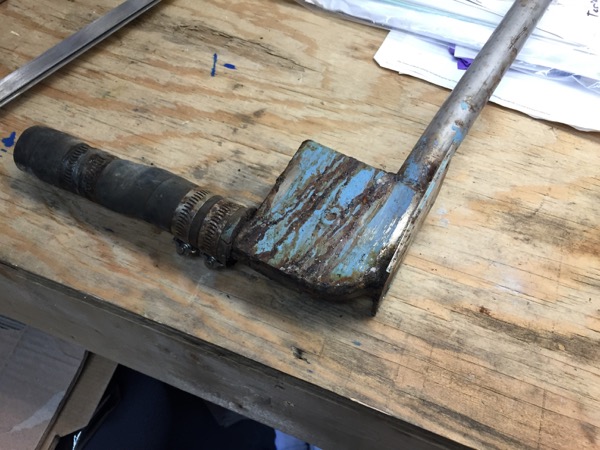
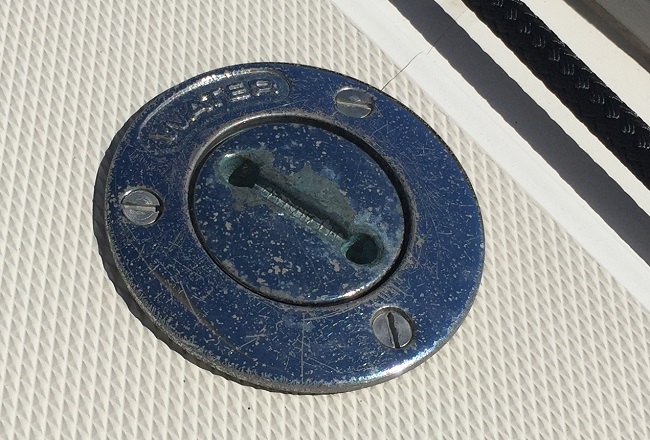
It’s vital for centerboard boat owners and crews to be fully aware of the location and nature of all components below the waterline – and for these components to be inspected regularly. Last summer when we hauled out to replace our broken centerboard cable, we got a look for the first time at the sheave box for the cable in the lazarette (pictured above) when it was removed as part of the cable replacement. Those brown streaks mean that some parts of the box had rusted completely through and begun to leak through pinholes – not good news given that this component lives below the water line! The rust wasn’t serious enough to be a risk to the boat in the immediate future, so we re installed it and made a note to remove it and have it repaired over the winter. I also noticed that a small section of rubber hose served as a coupler between the sheave box and the rest of the cable conduit, which is stainless steel. Though it was certainly due for replacement, the coupler didn’t look to be unsafe. Still, having seen both lazarette components I made a mental note for the coming winter to inspect the second (forward) sheave box where the cable exits the hull and its rubber coupler.  Continue reading Centerboard Boat? How To Prevent Potentially Dangerous Leaks

Considering A Battery Upgrade? Factor In The Change In Weight

Version 2

By Rich

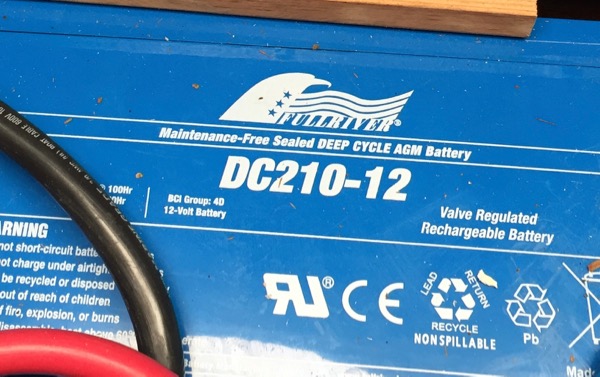
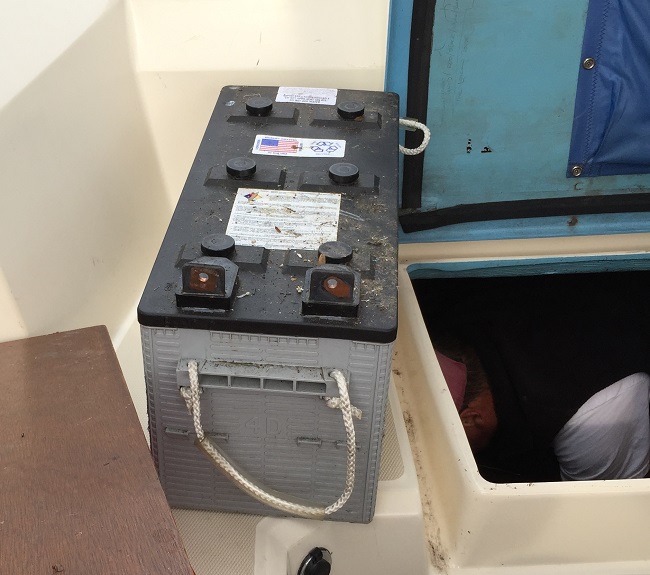
Our 1989 Sabre 42 originally came with 3 Group 27 marine batteries weighing +/- 67 pounds each for a total of 200 pounds or so. They provided 180 amp hours of house capacity (from two batteries) or 270 total if you factor in the third engine battery as well (I am assuming one of the three was originally dedicated to the engine). A prior owner upgraded our boat to one Group 27 engine battery and two 4D House batteries. The upgrade was well meaning, bumping the dedicated house battery capacity to 420 amp hours while still reserving a dedicated Group 27 for the engine. The downside was that the upgrade increased the total battery weight from 200 pounds to 331.

Continue reading Considering A Battery Upgrade? Factor In The Change In Weight

Lesson Number 5,000(?) In How Not To Repair A Boat

IMG_9453

By Rich

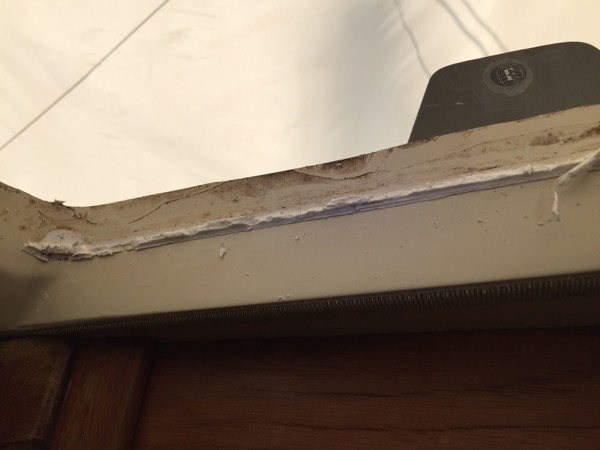
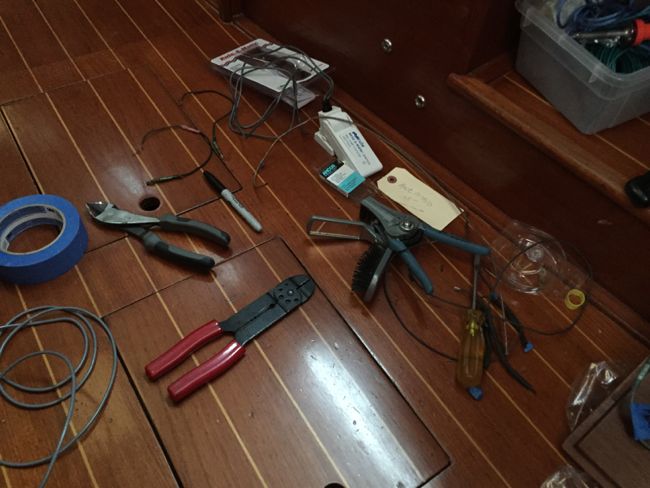
It’s pushing 7PM on Tuesday night, and I’m lying on my side, on the sole of the Sabre, with my arm submerged halfway in cold, smelly, oily bilge water and extended to its limits under the flooring as I work to fasten a new bilge pump float switch to the hull using only feel and instinct. My fingers work in the darkness while I stare up at the headliner and reflect on the percentage of fix-it projects we’ve had to take on aboard the Sabre through no fault of the factory but as a result of past over-confident / under-skilled do-it-yourselfers or lousy “professional” yard work. It’s got to be the vast majority. Two of last winter’s biggest projects, in fact, were taken on for just this reason: replacing one of the cracked holding tanks and re-bedding the poorly installed stainless opening portholes. Those projects are still only half complete; this winter the aft holding tank gets replaced and two of the six portholes are left to go.  Continue reading Lesson Number 5,000(?) In How Not To Repair A Boat

Learnings, Tips & Tricks: The Internet Aboard

bandwidth

By Rich

Typically when we think of internet we think in terms of performance – ie, whether the internet slows down if too many people are actively online in the house, or whether it is just slow in general. Drawing a parallel between data and water, the concept of internet performance is how much ‘flow’ capacity we have through our data ‘hose’ providing internet. When using a cell phone provider for internet aboard a boat we have an additional concern: how much total data we download within a given month. Many cellular data plans for either dedicated wifi hot spots or tethering via a cell phone (in my case, Sprint offers only the latter via my iPhone) have caps on the total data downloaded within a month before punishing surcharges set in.

Continue reading Learnings, Tips & Tricks: The Internet Aboard

Learnings, Tips & Tricks: Electrical Power Consumption

By Rich

Battery

Step 1: Make sure your House batteries haven’t gone bad. I’m only partially kidding. Coming off of an adult life spent almost entirely racing instead of cruising aboard sailboats, we knew we’d have a lot to learn about topics such as power consumption when living aboard.  Watching the pace at which our batteries drained during last year’s three-day weekends caused us to go into a spasm of power conservation modifications over the winter. Happily, this season we learned that the problem wasn’t excessive consumption on our part, it was worn-out batteries. That meant that we took a series of steps to cut our consumption that basically have us ready for the zombie apocalypse now that we have new batteries. One side note: the consumption figures sited below are for Rich living and working full time alone on the boat. Obviously consumption may rise when we are actively cruising with guests, but in those scenarios we will be running the motor more regularly so preservation of the battery charge becomes much less of a concern in general.

Continue reading Learnings, Tips & Tricks: Electrical Power Consumption