Hello from Rover! When I last left you we were in Quisset, Ma. a lovely, quiet and serene location. Our next venture started after meticulous piloting so as to enjoy a favorable current. Speeding through the Cape Cod Canal at 10 knots left us on the inside of the Cape with a sail to the next port of call, Provincetown, or Ptown (did they know I was coming?) Continue reading Whales, Workouts, and Weathervanes!→
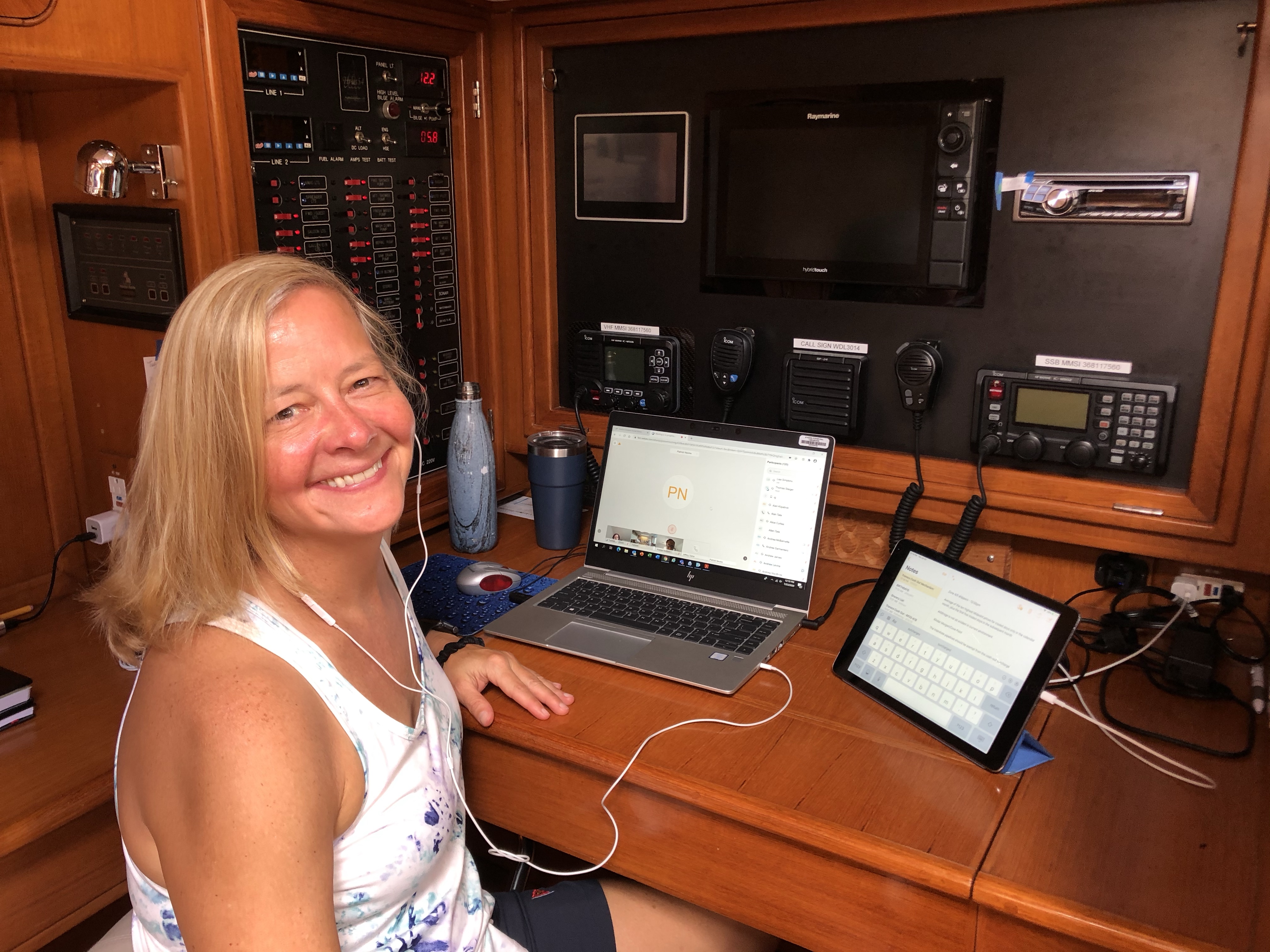
We bet a lot of you wonder how it’s going with three of the four of us working day jobs from the boat. It’s an interesting question because while I have been working from boats for long periods full time for several seasons between Rover and our prior boat, Le Saberage, those experiences were very different in that the boats tended to stay in one marina for weeks at a time, most often at a slip. That meant marina-supplied WiFi, electrical power supplied from the marina, and a known cell phone signal strength.
Alright readers! If you’ve ever anchored out in Annapolis for Blue Angels, the 4th of July, or Bands in the Sands, or if you’ve ever anchored … ummm …. anytime in the BVI, then you’ve no doubt seen some pretty heroically hair-brained stupidity by fellow captains trying to set or retrieve an anchor. Use the comments selection below (or PM me and I can post) and let’s see if we can select the winning story!
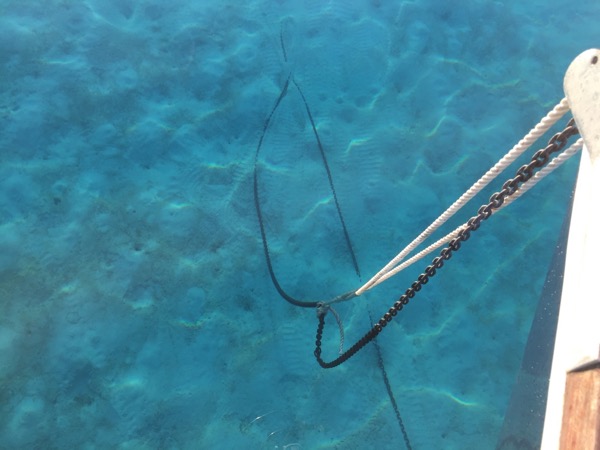
Fortunately for each member of Team Rover, we are all aligned on preferring to be at anchor by far over moorings or slips. That’s a really good thing because the experience is considerably different for each of the three options. Slips and (in particular) moorings are more or less tie-up-and-forget-it affairs, whereas anchoring requires more diligence and skill in choosing the right spot and monitoring to be sure swing radiuses are appropriate and the boat is not dragging in stiff breezes. So far we’ve been anchored more than half or 3+ week trip and I have the following reflections to share about the experience so far: Continue reading Hylas 54: Reflections On Ground Tackle→
Greetings from Rover! This entry covers almost 3 weeks of information on our stops to include site info, workout options and food. Future posts will be shorter as I get into the groove of writing. So, here we go…after 10 years of planning, we finally embarked on our “around the world” excursion on June 27, 2020 from Annapolis, MD. Like everyone, we needed additional thoughtful planning to account for the new normal, “living with Covid.” More of that to come for sure. Continue reading Paula’s First Post!→
Join us this Sunday for Part II of our three part webinar series. This week’s topics will be on our process for choosing the Hylas 54 as our passage making cruiser! We look forward to seeing you there.
Join us this Sunday at 5PM! We are giving the first of a three part seminar for the Annapolis Yacht Club on our transition from inshore Bay racers to offshore passage making and cruising. Here are are the details, we look forward to seeing you there!
3-Part Cruising Webinar: Starts this Sunday – 4/26, 5PM
Part 1 (April 26) will be an introduction to the crew and will cover our preparation for the cruise. Part 2 (May 3) will focus on yacht selection and Part 3 (May 10) will be about what we’ve learned so far.
It’s a terrible joke but I’ll make it again: marine diesel engines always fail at the worst time. From an engineering standpoint, this is a bad joke because there is a perfectly good reason why engines choose rough weather to fail: big seas stir up the asphaltenes or blobs of microbial growth, which then get sucked up into lines and filters. Many boat owners like to blame old, dirty fuel tanks or having “gotten bad fuel” at their last fill up, but the reality is that keeping fuel clean requires constant vigilance even on new boats. The ship’s log our our Hylas 54, Rover, show that she was experiencing engine failures due to clogged fuel filters when she was only a year old. Below is a great a video from Distant Shores TV showing they had the exact same experience on their one year old boat – and, as always, the engine failure occurred in an choppy inlet, which is when they always do. If you watch the video all the way through you will see that a terrible design flaw in Southerly’s fuel plumbing directly contributed their failure too.
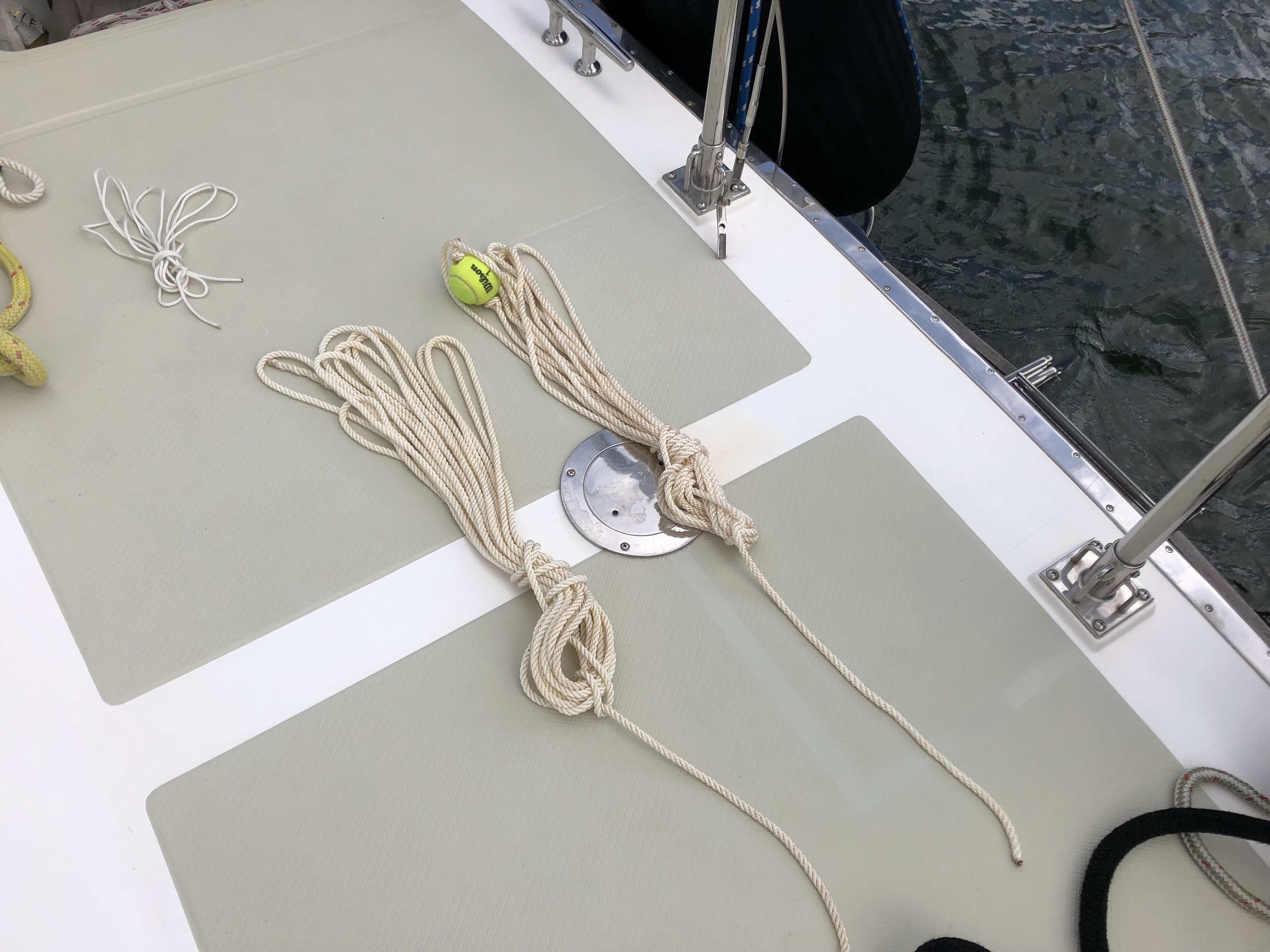
Don’t you hate it when you want to add a dockline to one corner of your boat, but the nearest piling is 15 feet away and much too tall to throw a line over it? On our Hylas 54 we found the prior owners had rigged heaving lines to solve the problem. Heaving lines are relatively light and small, but long lines with a weight on one end. Here’s what ours look like:

 Rover's Blog